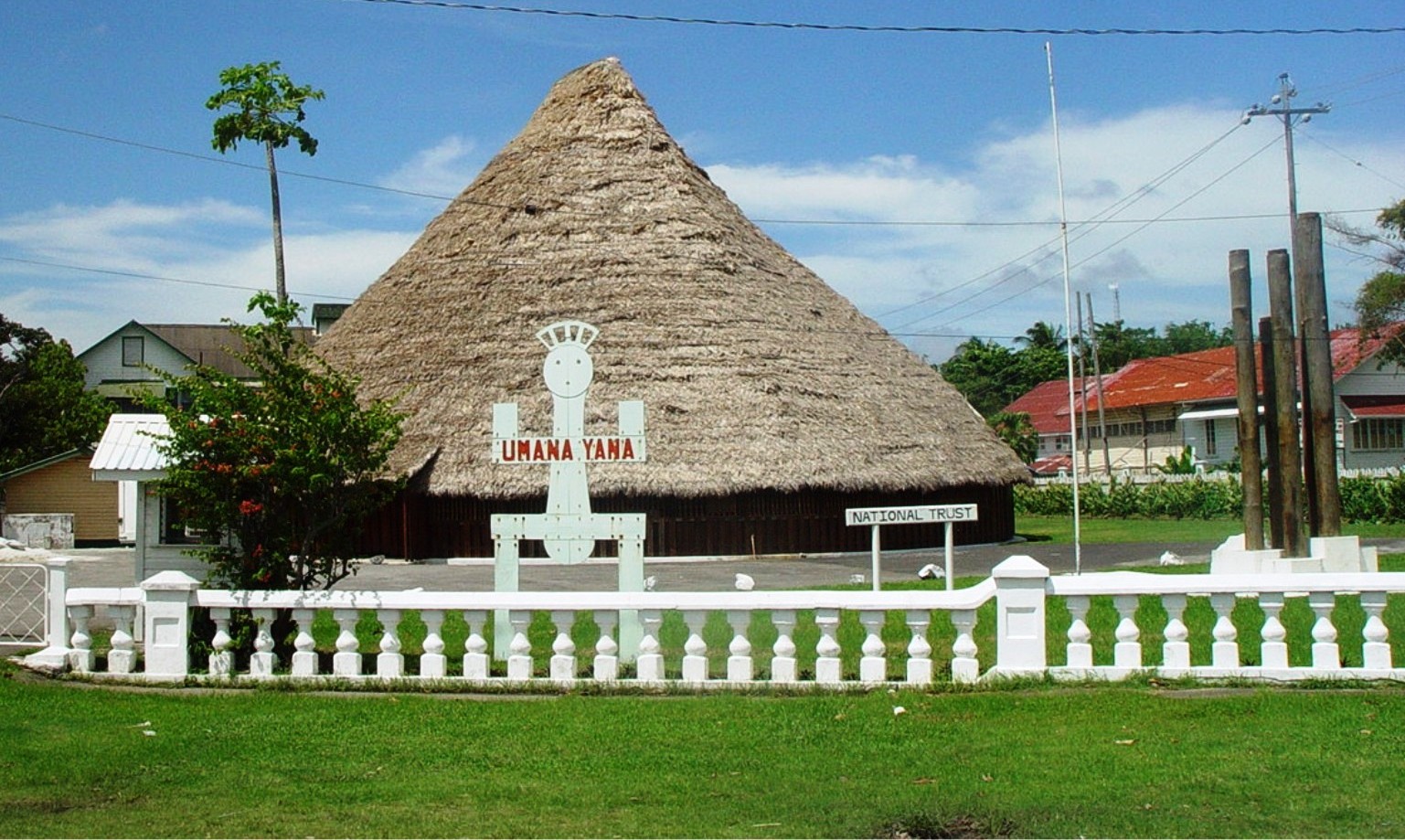
The Umana Yana rises quietly in Georgetown, its wide thatched roof and open structure offering a sense of calm rather than spectacle. For many Guyanese, it is familiar rather than monumental. Yet few buildings in the country better express how design, culture, and community intersect.
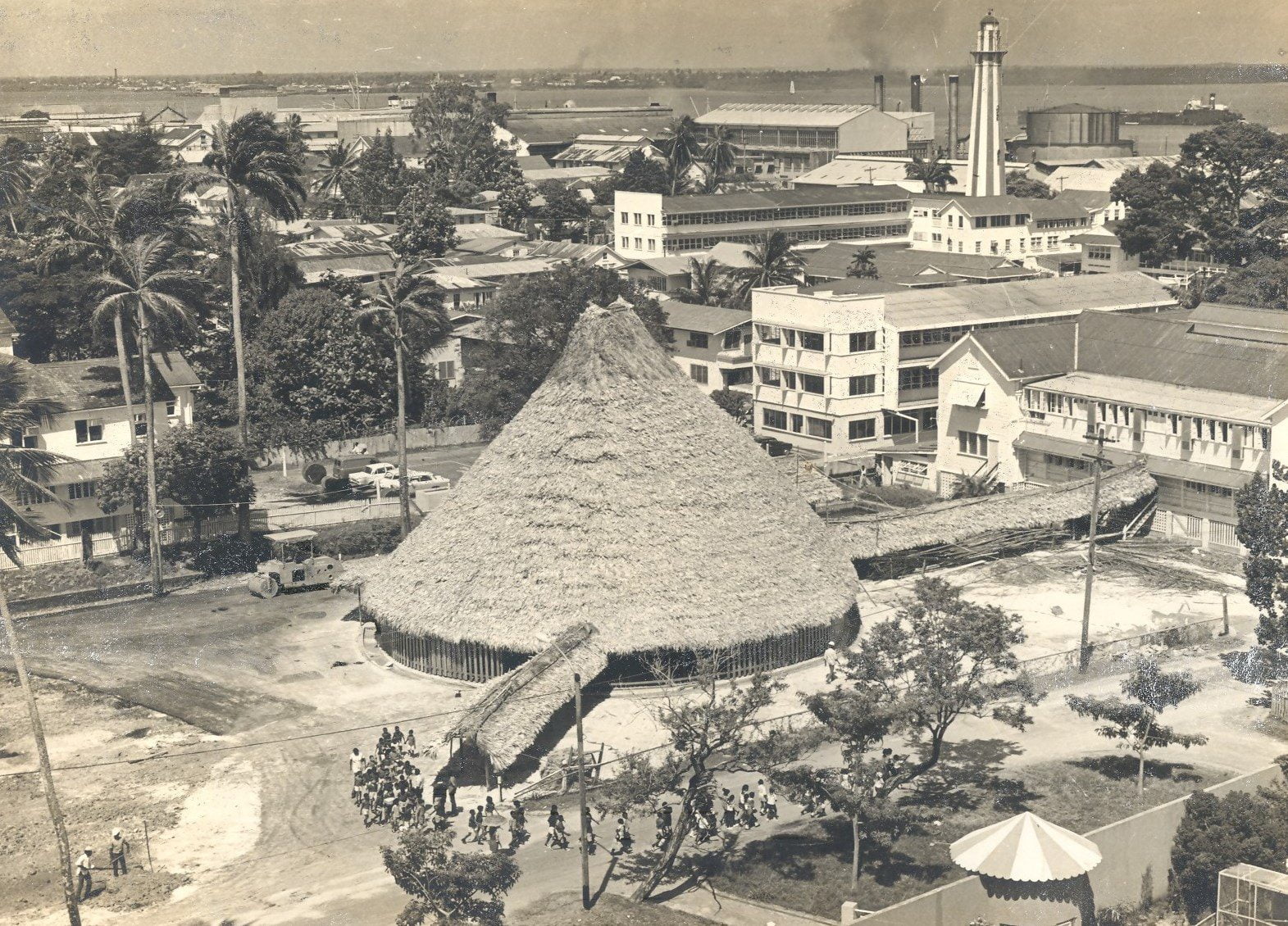
Constructed in 1972 by Wai Wai Indigenous craftspeople, the Umana Yana was commissioned for the Non Aligned Foreign Ministers Conference. Its form is based on the benab, a communal structure found across Indigenous communities in Guyana’s interior. The design prioritizes gathering, airflow, and shelter, responding directly to climate and social use rather than visual display.
What gives the Umana Yana lasting relevance is not only its symbolism, but its system. The building relies on layered palm thatch to regulate heat and rain, open sides to encourage ventilation, and lashing techniques that allow flexibility and repair. These methods reflect generations of Indigenous architectural knowledge refined through practice.
The structure’s history also tells a story of continuity and care. After a major refurbishment in 2010, the Umana Yana was destroyed by fire in September 2014. Its reconstruction, completed in 2016, was again led by Wai Wai craftspeople using traditional materials and techniques, reaffirming Indigenous expertise at a national scale.
In a period when sustainable architecture is often framed as a new discovery, the Umana Yana quietly demonstrates that climate responsive design has long existed in Guyana. It stands as both a civic space and a living reference for how design knowledge travels across time through people rather than plans.