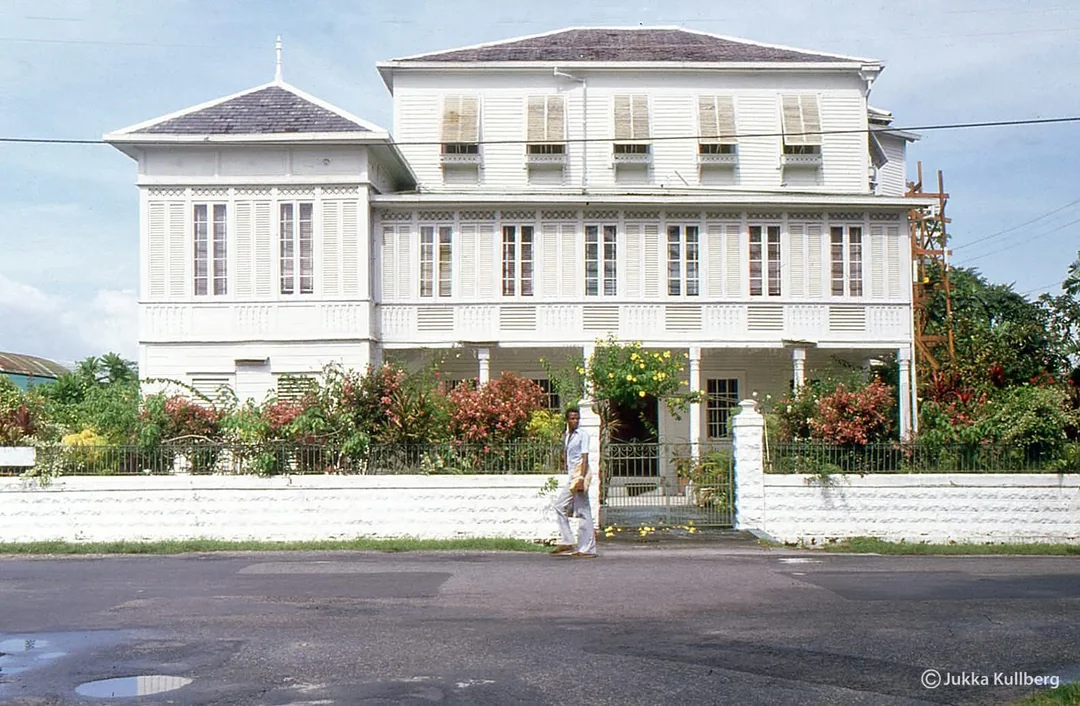
Guyana is changing quickly. New infrastructure, new investment, and renewed international attention are reshaping how the country is seen and how it sees itself. In moments like this, design often becomes more visible, even when it is not named as such.
Design Guyana exists because much of Guyana’s design culture has never been formally documented. From Indigenous architecture and craft, to hand painted signage, to artists working across generations, design has long shaped everyday life here. What has been missing is a place that treats these practices as knowledge rather than novelty.
Globally, design is increasingly understood as more than aesthetics. Organizations like UNESCO link design and cultural industries directly to economic development, education, and social cohesion. According to UNESCO’s Cultural and Creative Industries framework, creative sectors contribute over 3 percent of global GDP and employ more than 30 million people worldwide. Yet in many countries, including Guyana, everyday design practices remain underrepresented in official narratives.
At the national level, Guyana’s cultural economy is often discussed through festivals, music, and heritage, but less frequently through the lens of design systems. Buildings, tools, signs, objects, and visual languages shape how people move, communicate, and belong. When these are not recorded, they are easily overlooked or replaced without understanding what is lost.
Design Guyana matters now because it creates a public record. It documents objects, places, makers, and systems before they disappear or are absorbed into more generic global patterns. It also functions as a resource, connecting stories to real people, locations, and practices that can be visited, studied, or supported.
This platform is not about declaring what counts as “good design.” It is about paying attention. By treating Guyana’s designed environment with care and seriousness, Design Guyana helps build design literacy, cultural confidence, and continuity. In a period of rapid change, that attention becomes an act of stewardship.